
The Five Face Card Hand Paradox
A five face card hand is mathematically impossible in any standard 52-card deck, and that is exactly why it matters for odds calculation and hand-ranking integrity. There are only 12 face cards total — four Jacks, four Queens, four Kings. You cannot physically hold five of them in a single dealt hand unless the deck is corrupted, the shuffle algorithm is broken, or the game variant is non-standard. 🃏 This is not a theory. This is a hard combinatorial wall that separates legitimate hand ranking systems from theatrical nonsense.
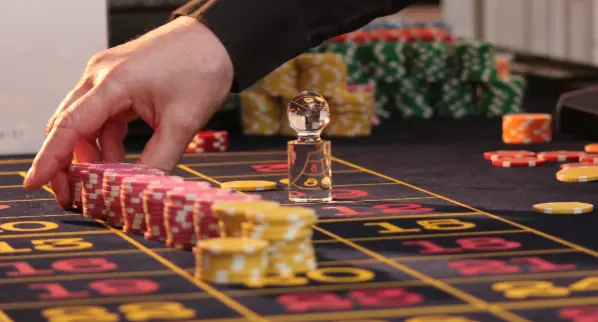
Combinatorial Breakdown: Why 12 Cards Cannot Make 5
Run the numbers. A standard deck contains 13 ranks across 4 suits. Face cards occupy ranks J, Q, K — three ranks, four suits each, totaling 12. The probability of drawing five face cards from a 52-card deck is exactly zero. Not "extremely low." Zero. The combination C(12,5) does not exist within a 52-card sample space because you would need 5 face cards from a pool of 12, but only 4 suits exist per rank. You max out at four face cards — one of each suit for a single rank, or a mixed set spanning multiple ranks. Any platform claiming a five face card hand ranks above a royal flush is running a corrupted hand ranking algorithm.
Where the Confusion Originates
Video poker variants and certain European table games introduce wild cards, jokers, or community card mechanics that blur the line. In Joker Poker, a joker can substitute for any card, theoretically completing a five face card configuration. But that is a modified deck with 53 or 54 cards, not the standard 52. The ranking hierarchy shifts entirely. A natural five of a kind beats everything. A five face card hand built with wilds typically ranks between four of a kind and a straight flush — never at the top. 🎰 Casino operators who misrepresent this ranking are either incompetent or predatory.

Algorithmic Detection of Ranking Fraud
From an audit perspective, you look for payout discrepancies. If a platform pays a five face card hand at a rate exceeding a straight flush, the return-to-player percentage will drift above 100% over a statistically significant sample. That is a red flag. Legitimate casino game auditors run Monte Carlo simulations across millions of hands to detect these anomalies. The expected frequency of four face cards in a five-card draw is roughly 0.03%. Five face cards? Mathematically undefined. Any game log showing that outcome has been tampered with.
Tournament and Side Bet Implications
Side bet markets occasionally offer exotic wagers on face card combinations. Always read the paytable rules. Some define "face card hand" as any hand containing at least three face cards. Others specify exactly five, which is impossible. The distinction matters for expected value calculation. A side bet requiring an impossible condition has an EV of negative infinity — you lose 100% of the time. Sharp players exploit this by identifying mispriced prop bets where the operator has confused a five-card hand ranking with a four-card maximum. 💰 That is free money in a regulated environment.
The Hardware and Shuffle Factor
Continuous shuffling machines and RNG-based digital decks introduce another layer. If the RNG seed cycles incorrectly, duplicate cards can appear in a single deal. That is how a five face card hand becomes physically possible — not through legitimate dealing, but through a hardware or software fault. Auditors check for duplicate card detection across thousands of hands. A single instance of duplicated rank-suit combinations invalidates the entire session. The ranking for such a hand? Void. The payout? Zero. The operator's license? At risk.